THE MINOR SCALE


On this page we explane how we derive the minor scale from the major scale. First we write down the major scale.
As a well known example, we use the scale of C-major and write it down in a length of 2 octaves. Now we
start playing on the A and also end on A.

The new scale, the scale of A-minor, starts and ends on A. The tones we use, are exactly the same as the tones
from C-major. But the sequence is different and therefore the new scale sounds completely different.
The reason for this is, that the intervals between al the tones are different from the distances in the
major scale. You can see this easily in the example.
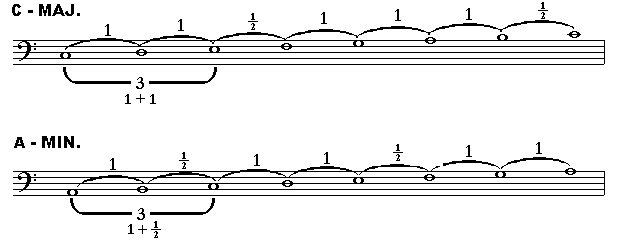
In the scale of C-major the interval between the 1st and the 3rd tone, is a major third.
That is why we call this scale C-major (major=large).
In the scale of A-minor the interval between the 1st and the 3rd tone, is a minor third.
Therefore we calle this scale A-minor (minor=small).
Because the scales of C-major and A-minor both have exactly the same tones, we call these
scales eachothers parallels.
A-minor is the parallel of C-major. A-minor starts a minor third under C-major!